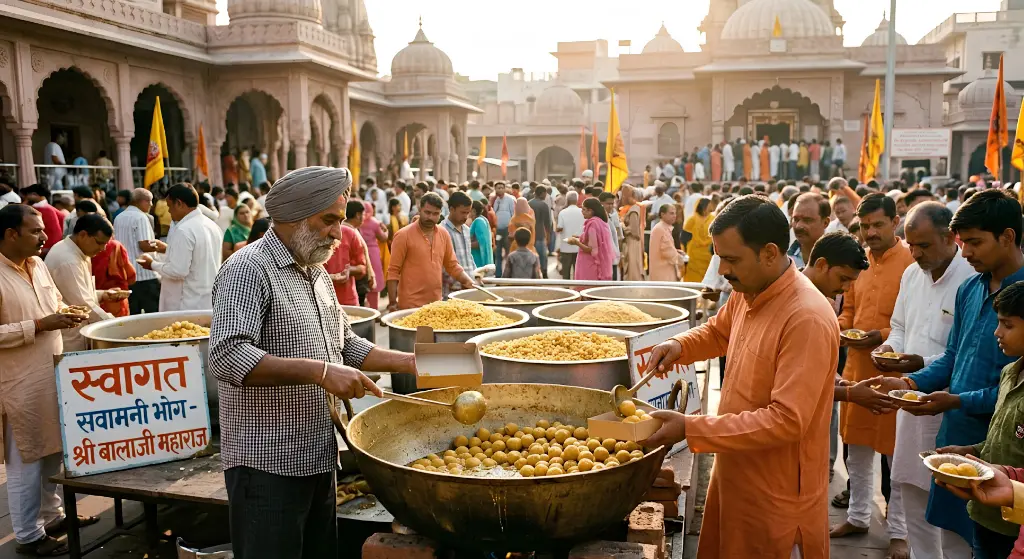
For most devotees, the Sawamani isn't a single, isolated event — it's the closing chapter of something that began much earlier, sometimes years earlier, with a prayer made during a genuinely difficult moment. Understanding why devotees choose Mehandipur Balaji Sawamani in the first place helps explain why the eventual journey to actually perform it carries so much personal weight by the time it happens.
Where It Starts
Almost every Sawamani traces back to a specific request — a health concern, a family matter, something uncertain that needed resolving at a particular point in someone's life. The prayer made in that moment is usually paired with a promise: if this is resolved, a Sawamani will follow as an act of thanks. That promise sits quietly in the background of ordinary life until circumstances eventually change and the moment to act on it arrives.
The Wait
Between the original prayer and the eventual Sawamani, there's often a stretch of ordinary life continuing on — the outcome still uncertain, the promise not yet fulfilled in any visible way. Some devotees describe this period as one of quiet, steady faith rather than active worry, trusting that the visit will happen when the time is genuinely right for it, rather than forcing it before circumstances allow.
Closing the Loop
When the wish is eventually fulfilled, the Sawamani becomes less about ritual obligation and more about deliberately following through on something personally significant. That's part of what separates this ceremony from a routine temple visit — it's the resolution of something specific and personal, not a generic act of worship performed on a fixed schedule. Understanding what happens during the ceremony itself helps, but it's worth knowing that for most devotees, the ritual's steps matter less in the moment than the fact that they're finally there to complete something they've carried for a long time.
Frequently Asked Questions
Does the Sawamani need to happen immediately after the wish is fulfilled?
No — many devotees plan their visit around practical considerations like travel, family schedules, and timing, sometimes performing the Sawamani months or even longer after the original promise was made.
Conclusion
Every devotee's path to their Sawamani looks a little different in the details, but the underlying shape — a promise made, a wait endured, a visit eventually completed — tends to repeat across generations of families who return here. When you're ready to begin that final step yourself, you can book your Sawamani and start planning the visit that closes your own particular chapter.
Footer
About Shree Shiv Misthan Bhandar
We provide Sawamani booking assistance and customer support for devotees visiting Shree Mehandipur Balaji Dham in Dausa, Rajasthan. We are an independent service provider and are not affiliated with the temple administration.
- Explore Sawamani packages: /services
- Book now: /booking
- Call or WhatsApp: +91-9521762864


