Introduction
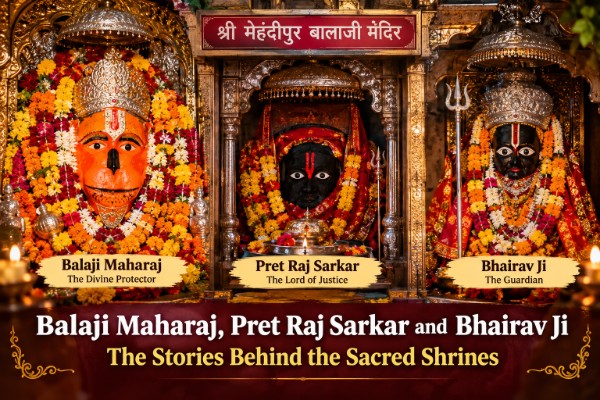
Mehandipur Balaji Temple, located in Rajasthan's Dausa district, is an important pilgrimage destination for devotees of Lord Hanuman. The temple is particularly known for its association with three sacred figures: Shri Balaji Maharaj, Shri Pret Raj Sarkar and Shri Bhairav Ji.
For devotees, these shrines are connected through a shared tradition of prayer, reverence and faith. Each figure has a distinct place in the religious understanding of the temple, and together they form an important part of the Mehandipur Balaji experience.
But who are these three deities? What stories are associated with them, and why do devotees pay their respects at these sacred shrines?
Let us explore their traditional significance and the beliefs that have made Mehandipur Balaji a distinctive pilgrimage destination.
1. Shri Balaji Maharaj: The Main Deity of Mehandipur
Shri Balaji Maharaj is the principal deity worshipped at Mehandipur Balaji Temple. Balaji is a name commonly used for Lord Hanuman in this region, and the deity is represented in a form associated with childhood.
Lord Hanuman holds a special place in Hindu tradition as a symbol of devotion, courage, strength, humility and unwavering dedication to Lord Rama.
The Traditional Story Behind Balaji Maharaj
According to local religious tradition, the sacred image of Balaji Maharaj appeared naturally in the rocky landscape of Mehandipur. Stories associated with the temple describe the deity's manifestation as a divine event that eventually drew saints, worshippers and religious followers to the area.
The Rajasthan government's heritage report also records local legends surrounding the appearance of the deity and the development of worship at the site. These accounts form part of the temple's religious tradition; their legendary details should be distinguished from independently verified historical records.
Over time, the shrine became a recognised place of worship, with generations of religious caretakers maintaining its traditions.
Why Do Devotees Worship Balaji Maharaj?
Devotees commonly associate Lord Hanuman with qualities such as:
-
Courage: Facing difficulties with determination.
-
Devotion: Remaining faithful to one's spiritual path.
-
Strength: Developing resilience during challenging times.
-
Protection: Seeking divine blessings and reassurance.
-
Humility: Using strength in the service of others.
At Mehandipur, many pilgrims visit to offer prayers and seek spiritual comfort. These practices reflect personal faith and religious belief rather than a guarantee of any particular outcome.
2. Shri Pret Raj Sarkar: The Sacred Figure Associated with Divine Justice
Shri Pret Raj Sarkar occupies an important place in the religious traditions of Mehandipur Balaji Temple. The name is traditionally associated with the idea of a sovereign or authority presiding over matters involving spirits.
Within local belief, Pret Raj Sarkar is understood as a figure associated with spiritual justice and the resolution of difficulties that devotees interpret through a religious framework.
The Traditional Beliefs About Pret Raj Sarkar
Stories associated with Pret Raj Sarkar describe a divine court in which spiritual matters are presented and addressed. This imagery helps explain why devotees often approach the shrine with a sense of seriousness and reverence.
The term Sarkar conveys authority or a respected governing presence. For worshippers who follow these traditions, the shrine represents the belief that divine order and justice extend beyond ordinary human understanding.
These accounts belong to the temple's devotional and folkloric tradition. Different people may interpret them differently, and supernatural claims should not be treated as scientifically established facts.
Why Is Pret Raj Sarkar Important to Devotees?
Pret Raj Sarkar is significant because the shrine forms part of the temple's distinctive religious identity. Devotees who are familiar with local traditions may pay their respects here alongside their worship of Balaji Maharaj.
The shrine also reflects the way religious stories, local customs and generations of worshippers have shaped the character of Mehandipur Balaji.
For first-time visitors, it is helpful to approach these traditions respectfully without assuming that every devotee shares the same interpretation.
3. Shri Bhairav Ji: The Guardian Figure in the Temple Tradition
Shri Bhairav Ji, also worshipped as Bhairav Baba, is another important figure associated with Mehandipur Balaji Temple.
In Hindu religious tradition, Bhairava is a powerful form associated with Lord Shiva. Bhairava worship is often connected with guardianship, vigilance, discipline and the protection of sacred places.
At Mehandipur Balaji, Bhairav Ji is revered alongside Balaji Maharaj and Pret Raj Sarkar.
The Religious Significance of Bhairav Ji
Bhairava traditions appear in several Hindu religious settings, and their meaning can differ from one region or shrine to another.
In the context of Mehandipur Balaji, devotees regard Bhairav Ji as an important part of the sacred darbar. His presence contributes to the temple's religious symbolism of strength, authority and protection.
For worshippers, offering prayers at this shrine can be an expression of respect for the divine and a way to participate in the temple's established devotional customs.
Why Do Devotees Pay Their Respects to Bhairav Ji?
Devotees may visit Bhairav Ji's shrine as part of their temple visit because of the deity's recognised place within the local tradition.
The practice is rooted in religious reverence, and visitors should follow the current directions and customs communicated by the temple authorities.
4. Why Are the Three Shrines Connected?
One of the distinctive features of Mehandipur Balaji is the close religious association between Balaji Maharaj, Pret Raj Sarkar and Bhairav Ji.
Although the three figures have different identities and traditional roles, they are worshipped within the same sacred setting.
Their combined significance can be understood through three broad themes:
Devotion and Courage
Balaji Maharaj represents Lord Hanuman's celebrated qualities of strength, service and devotion. For many worshippers, these qualities provide spiritual inspiration.
Justice and Spiritual Authority
Pret Raj Sarkar is associated in local tradition with divine authority and the resolution of spiritual concerns.
Guardianship and Protection
Bhairav Ji's wider religious associations with guardianship and vigilance contribute another dimension to the temple's devotional character.
Together, these traditions help explain why the three shrines hold such importance for pilgrims. Their combined meaning is a matter of religious belief and interpretation.
5. The Role of Bhog and Prasad at the Sacred Shrines
Food offerings are an important part of Hindu worship, and Mehandipur Balaji follows established traditions of bhog and prasad.
According to the temple's official information, Balaji Maharaj receives different offerings during the day, and bhog is also offered to Pret Raj Sarkar and Bhairav Ji.
What Is Bhog?
Bhog is food presented to a deity as an act of devotion. After the prescribed offering and associated rituals, food may be distributed or treated as prasad according to the applicable religious custom.
What Is the Significance of Sawamani?
Mehandipur Balaji Sawamani is a food-offering tradition associated with devotees expressing gratitude, fulfilling a personal vow or observing a family religious custom.
The arrangements and accepted offerings can vary, so visitors should check the current rules before organising a Sawamani.
For related planning information, visit the Mehandipur Balaji Sawamani. Confirm the details of any service before making a payment.
6. What Should First-Time Visitors Know?
If you are visiting Mehandipur Balaji Temple for the first time, understanding its religious customs can help you prepare for the experience.
-
Learn about the shrines: Familiarise yourself with the traditional significance of the three figures before visiting.
-
Follow local instructions: Observe directions from authorised temple personnel.
-
Respect other devotees: The temple can become crowded, especially on auspicious days and festival occasions.
-
Check current timings: Darshan schedules may change for rituals or special occasions.
-
Be careful with online claims: Avoid unverified stories, guaranteed promises or requests for payment from unknown individuals.
-
Seek appropriate professional help for health concerns: Religious devotion can be personally meaningful, but it should not replace medical or mental-health care.
The most respectful approach is to participate according to your own beliefs while allowing others the same freedom.
7. Planning Your Mehandipur Balaji Visit and Sawamani
Some devotees visit for darshan alone, while others plan their trip around a family offering or a religious occasion.
If you are arranging Sawamani, confirm the accepted offering types, procedure, date and any relevant charges before travelling.
For Mehandipur Balaji Sawamani Online Booking information, you can begin with the Mehandipur Balaji Sawamani. Review the information carefully and verify whether the service is provided by an independent booking service or the temple itself.
For Mehandipur Balaji Sawamani Booking Contact Number details and temple-related questions, use verified contact information. The official temple website is available at shribalajimehandipur.org.
Remember that independent booking assistance should not be represented as the official temple administration.
Frequently Asked Questions
1. Who are the three main sacred figures at Mehandipur Balaji?
The three figures commonly associated with the temple's religious tradition are Shri Balaji Maharaj, Shri Pret Raj Sarkar and Shri Bhairav Ji.
2. Who is Balaji Maharaj?
Balaji Maharaj is the name used for Lord Hanuman at Mehandipur Balaji Temple. Devotees revere him as the principal deity of the shrine.
3. Who is Pret Raj Sarkar?
Pret Raj Sarkar is a sacred figure in the temple's local religious tradition, associated with spiritual authority and a divine court. These associations are matters of faith and traditional belief.
4. Who is Bhairav Ji?
Bhairav Ji, or Bhairav Baba, is associated with Bhairava, a form of Lord Shiva in Hindu tradition. The deity is revered at Mehandipur Balaji alongside the other principal figures.
5. Why do devotees worship all three figures?
The three figures have distinct traditional identities but are connected within the temple's religious practices. Devotees may pay their respects to all three as part of their pilgrimage.
6. Is bhog offered to all three shrines?
The temple's official information states that bhog is offered to Balaji Maharaj, Pret Raj Sarkar and Bhairav Ji. Specific schedules and procedures should be confirmed through official temple information.
7. Can devotees arrange Sawamani before their visit?
Arrangements may be available through the relevant temple process or a service provider. Confirm the current procedure, accepted offerings and payment details before proceeding.
8. Where can I find official information about Mehandipur Balaji Temple?
Visit the official Mehandipur Balaji Temple website for temple information, religious customs and contact details.
Conclusion
The traditions surrounding Balaji Maharaj, Pret Raj Sarkar and Bhairav Ji are central to the religious identity of Mehandipur Balaji Temple. Each figure has a distinct place in local belief, while their association within one sacred setting gives the temple its distinctive devotional character.
Balaji Maharaj is revered as Lord Hanuman, a symbol of strength and devotion. Pret Raj Sarkar is associated with spiritual authority in local tradition, while Bhairav Ji represents the wider Hindu tradition of guardianship and divine power.
For devotees, learning about these shrines can add meaning to a visit. Whether you come for darshan, to understand the temple's stories or to arrange Mehandipur Balaji Sawamani, plan thoughtfully, follow the applicable temple guidelines and approach the traditions with respect.

