Introduction
What makes a temple famous for generations? Is it the age of its sacred shrine, the stories passed down by devotees, or the faith that brings people back year after year?
The ancient history of Mehandipur Balaji brings together all three. Situated in the Dausa district of Rajasthan, Mehandipur Balaji Temple is one of the well-known pilgrimage destinations dedicated to Lord Hanuman. Its identity is closely connected with traditional stories of Balaji Maharaj's appearance, the service of generations of Mahants, and the distinctive religious practices followed at the shrine.
Unlike places whose origins are recorded through dated inscriptions or royal documents, much of Mehandipur Balaji's early story is preserved through religious traditions and accounts associated with the temple.
In this article, we explore the traditional origins of Mehandipur Balaji, its important deities, the history of its religious service, and the customs that continue to shape the experience of devotees today.
1. The Ancient Setting of Mehandipur Balaji
Mehandipur Balaji Temple is located at Ghata Mehandipur in Rajasthan's Dausa district. The shrine stands between two hills, a setting that forms an important part of its traditional identity.
The surrounding landscape is often mentioned in accounts of the temple's origins. According to the temple's own tradition, the area was once covered by dense forest, and the sacred site became known through the divine appearance of Balaji Maharaj.
The temple's official history describes the shrine as a place where Lord Hanuman appeared in his child form. This traditional account has been passed down through generations and remains central to the temple's religious significance.
Although the precise date of the earliest worship is not firmly established through modern historical records, the site's longstanding devotional importance is reflected in its continuing role as a pilgrimage destination.
2. The Story of Balaji Maharaj's Appearance
One of the most important stories associated with Mehandipur Balaji concerns the appearance of the deity at the sacred location.
What Does the Temple Tradition Say?
According to the traditional account published by the temple, Gosai Ji Maharaj, an ancestor of the Mahant family, experienced a remarkable dream. In the story, he witnessed a divine scene involving Balaji Maharaj, Bhairav Ji, and Pret Raj Sarkar.
The account says that Gosai Ji Maharaj was guided towards the sacred location and was instructed to begin serving Balaji Maharaj. Following this experience, he is traditionally believed to have reached the site and initiated worship.
For devotees, this story explains the spiritual connection between the deity, the location, and the generations who have maintained the temple's worship.
It is important to understand that this is a religious origin story rather than a fully dated historical record. Its significance lies in the faith and traditions through which the temple community remembers its beginnings.
3. Why Is Balaji Maharaj Worshipped in Child Form?
The name Balaji is associated with the childhood form of Lord Hanuman in this temple's devotional tradition.
In Hindu religious belief, Lord Hanuman represents courage, loyalty, humility, strength, and unwavering devotion. Worshippers look to him as an example of selfless service and dedication to Lord Rama.
The child form of Balaji Maharaj gives the shrine a distinctive devotional identity. For many visitors, the temple is a place to offer prayers, express gratitude, and seek spiritual reassurance during challenging times.
These beliefs help explain why the name Mehandipur Balaji is recognized by devotees across Rajasthan and beyond.
4. The Three Sacred Presences at Mehandipur Balaji
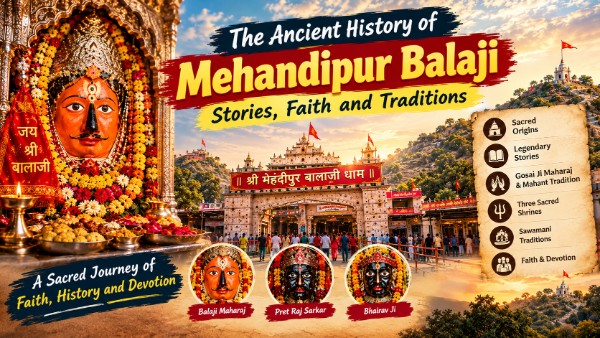
Mehandipur Balaji is especially associated with three important deities: Balaji Maharaj, Pret Raj Sarkar, and Bhairav Ji.
Balaji Maharaj
Balaji Maharaj, the principal deity, is worshipped as a form of Lord Hanuman. Devotees associate him with strength, courage, protection, and devotion.
Pret Raj Sarkar
Pret Raj Sarkar holds a distinctive position in the temple's religious traditions. Devotees understand this figure through the shrine's customary beliefs and practices.
Bhairav Ji
Bhairav Ji is another important presence within the temple complex. His shrine contributes to the religious identity and ritual traditions associated with Mehandipur Balaji.
Together, these three sacred presences are central to the temple's devotional character. Visitors should follow the instructions provided by temple authorities when visiting the different shrines.
5. The Mahant Tradition: Generations of Service
The story of Mehandipur Balaji is not only about its traditional origins. It is also about the people who have maintained its worship and helped the shrine develop over time.
According to the temple's official account, generations of the Goswami Mahant family have served Balaji Maharaj. This tradition of service has played a significant role in preserving religious practices and maintaining continuity at the shrine.
The temple's published history also describes the contribution of Mahant Ganesh Puri Ji Maharaj to the development and rebuilding of the temple complex. In 1965, responsibility for its management was passed to Mahant Kishore Puri Ji Maharaj.
These developments represent an important part of the temple's more recent history. They show how a place of traditional worship can grow into a larger pilgrimage centre while maintaining its religious identity.
6. How Did Mehandipur Balaji Become a Famous Pilgrimage Destination?
The popularity of Mehandipur Balaji developed through a combination of religious devotion, local traditions, and the experiences that visitors shared with their families and communities.
Over time, more devotees began travelling to the shrine. As visitor numbers increased, the surrounding settlement developed to accommodate pilgrims, including facilities for accommodation and other travel needs.
The temple also became widely known for its distinctive worship practices and its association with spiritual relief. These beliefs are an important part of the temple's reputation, although individual religious experiences should not be treated as scientific proof of supernatural claims.
Today, Mehandipur Balaji is an important destination for people interested in Hindu religious traditions, pilgrimage, and the cultural heritage of Rajasthan.
7. The History and Meaning of Sawamani at Mehandipur Balaji
A significant devotional practice associated with the temple is Sawamani, a food offering made as an expression of faith.
For many Hindu devotees, offering food to a deity is a way of expressing gratitude, fulfilling a vow, or marking an important family occasion. Sawamani forms part of this broader tradition of devotional offerings.
The practice is meaningful because it connects personal devotion with a shared religious custom. Families may arrange an offering after a prayer is fulfilled or during a visit to the temple.
People planning a Mehandipur Balaji Sawamani should check the current arrangements, offering requirements, and relevant temple guidelines before travelling. The precise process should be confirmed rather than assumed, as arrangements may depend on the service being used.
8. Religious Traditions That Continue Today
Mehandipur Balaji's heritage is reflected not only in stories about its beginnings but also in the customs followed by devotees.
Prayer and Devotion
Visitors come to offer prayers to Balaji Maharaj and participate in the temple's established worship practices. Many see the pilgrimage as an opportunity to reflect, express gratitude, and strengthen their faith.
Festivals and Special Occasions
Religious festivals connected with Lord Hanuman and the wider Hindu calendar are important occasions for devotees. Visitor numbers and arrangements can vary during major festivals, so checking current information before travelling is sensible.
Respect for Temple Guidelines
The temple has its own practices and instructions for visitors. Devotees should follow official guidance, respect other worshippers, and confirm any special requirements in advance.
These customs help preserve the religious character of the shrine for future generations.
9. Planning Your Visit: Booking and Practical Information
People interested in the temple's ancient history often decide to visit after learning about its traditional stories and religious significance.
Before making a trip, confirm the current opening arrangements, travel options, and any special offering requirements through reliable sources.
Mehandipur Balaji Sawamani Online Booking
If you plan to arrange a Sawamani offering, you may search for Mehandipur Balaji Sawamani Online Booking information before your visit.
Review the service details carefully and confirm what the arrangement includes. For temple-managed services, consult the official temple website. If you use an independent booking assistance provider, verify its identity and understand that it is separate from the temple administration.
You can also review the relevant booking information available through our website before deciding how to proceed.
Mehandipur Balaji Sawamani Booking Contact Number
Visitors looking for a Mehandipur Balaji Sawamani Booking Contact Number should first establish whether the number belongs to the temple administration or an independent service provider.
For official enquiries, use the contact information published on the official temple website. For independent assistance, confirm the provider's service details, applicable charges, and payment terms before making a payment.
Avoid relying on unverified contact numbers or assuming that every online booking service is officially operated by the temple.
10. What Makes the History of Mehandipur Balaji Unique?
The story of Mehandipur Balaji is distinctive because its identity brings together traditional accounts of the deity's appearance, a continuing lineage of religious service, and a set of customs that remain meaningful to devotees.
Its location between two hills forms an important part of its traditional story. The accounts associated with Gosai Ji Maharaj explain how the shrine's worship is remembered within the temple's own history. The Mahant tradition illustrates how generations have continued serving the sacred site.
At the same time, the temple's growing importance as a pilgrimage destination reflects the role of community, travel, and shared devotion in preserving religious heritage.
Understanding these different elements allows visitors to appreciate the temple without confusing traditional beliefs with independently verified historical facts.
Frequently Asked Questions
1. What is the ancient history of Mehandipur Balaji?
The temple's traditional history describes the appearance of Balaji Maharaj at a sacred location between two hills. The temple also associates its early worship with Gosai Ji Maharaj and the service of generations of the Mahant family. The exact date of the earliest events is not firmly established by modern historical records.
2. Who is Gosai Ji Maharaj in the history of Mehandipur Balaji?
According to the temple's traditional account, Gosai Ji Maharaj was an ancestor of the Mahant family who was guided towards the sacred site and began serving Balaji Maharaj.
3. Why is Mehandipur Balaji Temple located between two hills?
The location between two hills is an important feature of the temple's traditional origin story. The temple's own account connects this setting with the appearance of Balaji Maharaj.
4. Who are Balaji Maharaj, Pret Raj Sarkar, and Bhairav Ji?
They are the three principal sacred presences associated with the temple's religious identity. Balaji Maharaj is worshipped as a form of Lord Hanuman, while Pret Raj Sarkar and Bhairav Ji hold important places in the shrine's customary traditions.
5. Is the ancient history of Mehandipur Balaji fully documented?
Not every detail of the temple's traditional origins has a precise date or independent historical confirmation. The temple's official account preserves important religious traditions, while historical reports provide additional context about the site and its development.
6. What is Mehandipur Balaji Sawamani?
Sawamani is a devotional food offering made to the deity. Devotees may arrange it to express gratitude, honour a vow, or mark a special religious occasion.
7. Where can I find Mehandipur Balaji Sawamani Online Booking information?
You can review the relevant booking information on service websites. For temple-managed arrangements, verify the latest details directly through the official temple website.
8. How do I verify a Mehandipur Balaji Sawamani Booking Contact Number?
Check the official temple website for temple enquiries. If contacting an independent service, verify its identity and confirm that it is not being presented as the official temple administration.
Conclusion
The ancient history of Mehandipur Balaji is preserved through a combination of traditional stories, religious devotion, and the continuing service of generations associated with the shrine.
From the traditional account of Balaji Maharaj's appearance to the story of Gosai Ji Maharaj and the Mahant lineage, these narratives help explain why the temple holds such an important place in the lives of many devotees.
Whether you are researching its history or preparing for a pilgrimage, learning about the temple's traditions can help you appreciate its cultural and spiritual significance. By respecting local customs and verifying practical information through reliable sources, visitors can approach Mehandipur Balaji with both understanding and devotion.


